The best GPT-6 API alternatives for lower cost per task include GPT-5.6 Sol, Claude Opus 5, Claude Fable 5.1, Gemini 3.8 Flash, DeepSeek V4.1 Flash, GLM-5.3, Qwen 3.8 Max, and Grok 4.6. The right choice depends on whether you prioritize OpenAI compatibility, frontier reasoning, high-volume execution, long context, agent speed, or the lowest published token price.
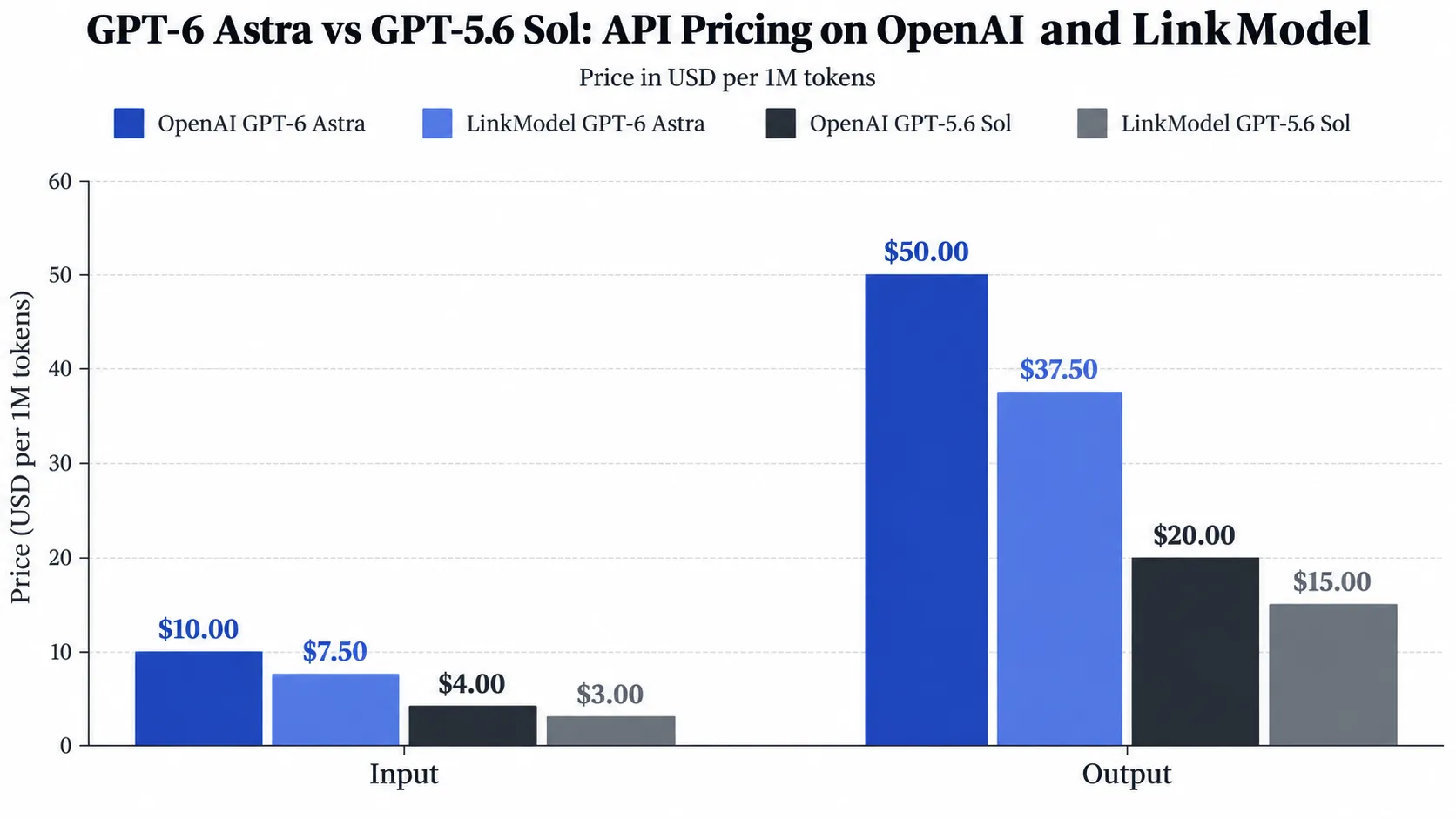
The problem is that lower token pricing does not always mean lower real task cost. GPT-6 Astra starts at $10/M input and $50/M output, while retries, reasoning tokens, tool loops, cache misses, failed runs, and human review can increase total spend. For production, cost per successfully completed task matters more than price per million tokens.
For production teams, a more cost-efficient GPT-6 API strategy is often multi-model routing: use lower-cost models for routine workloads and reserve frontier models for tasks that need stronger reasoning. LinkModel makes this easier by providing GPT-6 Astra and the alternatives compared below through one OpenAI-compatible API, one API key, and unified billing. GPT-6 Astra is available at 75% of OpenAI’s corresponding Standard API token rates.

Best GPT-6 API Alternatives at a Glance
We selected these eight alternatives because each offers at least one practical advantage over Astra for specific workloads: lower API pricing, strong coding or agent capability, high throughput, long-context support, or a viable path toward local deployment.
| Model | Starting API Price | Best For | Main Caveat |
| GPT-5.6 Sol | $4/M input, $20/M output* | Lower-cost OpenAI workflows | Promotional pricing |
| Claude Opus 5 | $5/M input, $25/M output | Frontier coding and agents | Costs more than budget execution models |
| Claude Fable 5.1 | $10/M input, $50/M output | Long-running difficult work | Not a budget Astra replacement |
| Gemini 3.8 Flash | $0.75/M input, $3.75/M output* | High-volume execution | Can miss subtasks in long multi-task prompts |
| DeepSeek V4.1 Flash | $0.15/M uncached input, $0.60/M output off-peak | Very low API cost | Tool and harness behavior needs validation |
| GLM-5.3 | $1.40/M input, $4.40/M output | Configurable reasoning | Reasoning settings can sharply increase output |
| Qwen 3.8 Max | $1.65/M input, $4.951/M output* | Long context | Pricing varies by region |
| Grok 4.6 | $2/M input, $6/M output | Fast agent workflows | Price doubles at 200K+ context |
Prices marked with an asterisk are promotional, introductory, or region-specific. Pricing was checked on September 17, 2026; verify current rates before deployment.
Benchmarks help shortlist models, but benchmark scores are not production economics. Different evaluations use different harnesses and reasoning settings, so our research gives more weight to workflow cost, completion, retries, latency, and supervision.
This is why we compare models by cost per successful task rather than token price alone. A lower-priced model can still cost more if it requires additional reasoning, retries, tool calls, failed runs, or human correction.
How We Evaluated These GPT-6 Alternatives
We compared published API pricing and context limits with workflow evidence covering coding, agents, code review, tool use, long-context tasks, and local inference. We treat official pricing, controlled workflow observations, subscription-usage reports, benchmark results, and local inference tests as separate evidence types because they are not directly comparable. Single-workflow observations are used to identify operational trade-offs, not as universal model benchmarks. Pricing was checked on September 17, 2026.
Why Developers Are Looking for GPT-6 API Alternatives
Astra’s 272K Cost Cliff Changes the Economics
GPT-6 Astra costs $10/M input and $50/M output for Standard short-context requests. GPT-5.6 Sol currently costs $4/M input and $20/M output under promotional pricing available at least through November 21, 2026.
For the same workload of 100K fresh input tokens and 10K output tokens, Astra costs about $1.50, compared with $0.60 on Sol.
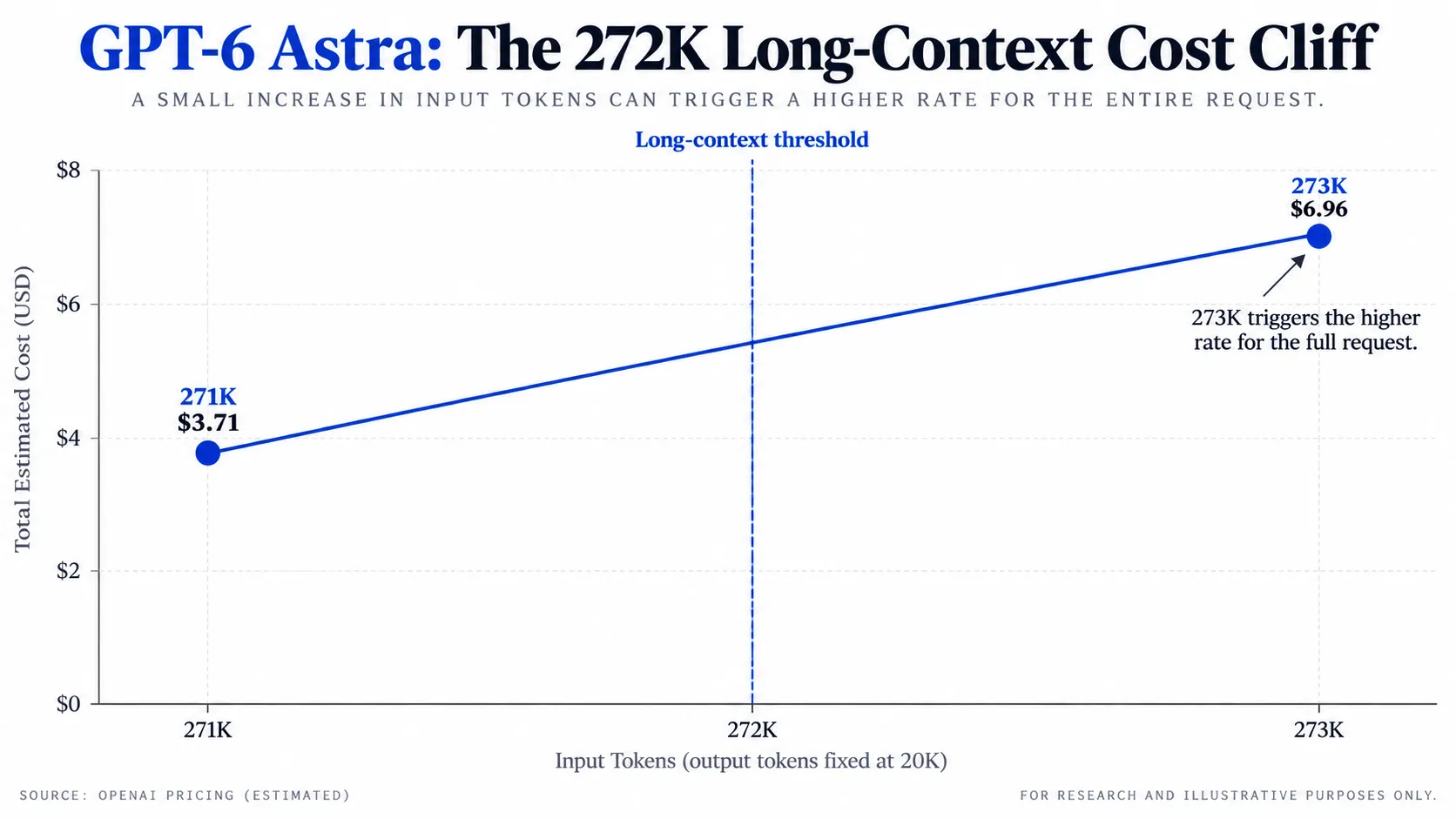
The difference becomes sharper above Astra’s 272K input-token threshold. In our pricing analysis, a request with 271K input tokens and 20K output tokens cost about $3.71. Increasing input to 273K raised the estimated cost to $6.96 because the long-context multiplier applied to the full request.
That is roughly an 88% cost increase from about 0.7% more input. For coding agents, RAG systems, and long conversations, context size can therefore change model economics as much as the listed token rate.
This means teams with agentic coding, large repositories, long RAG contexts, or persistent conversations may save more by controlling context or routing long requests than by choosing a model based on base token price alone.
Cost per Successful Task Beats Cost per Million Tokens
Our research repeatedly found that the cheapest model per million tokens was not always the cheapest per finished task. A better framework is real task cost = token spend + reasoning + retries + tool loops + cache misses + failed runs + human review + time.
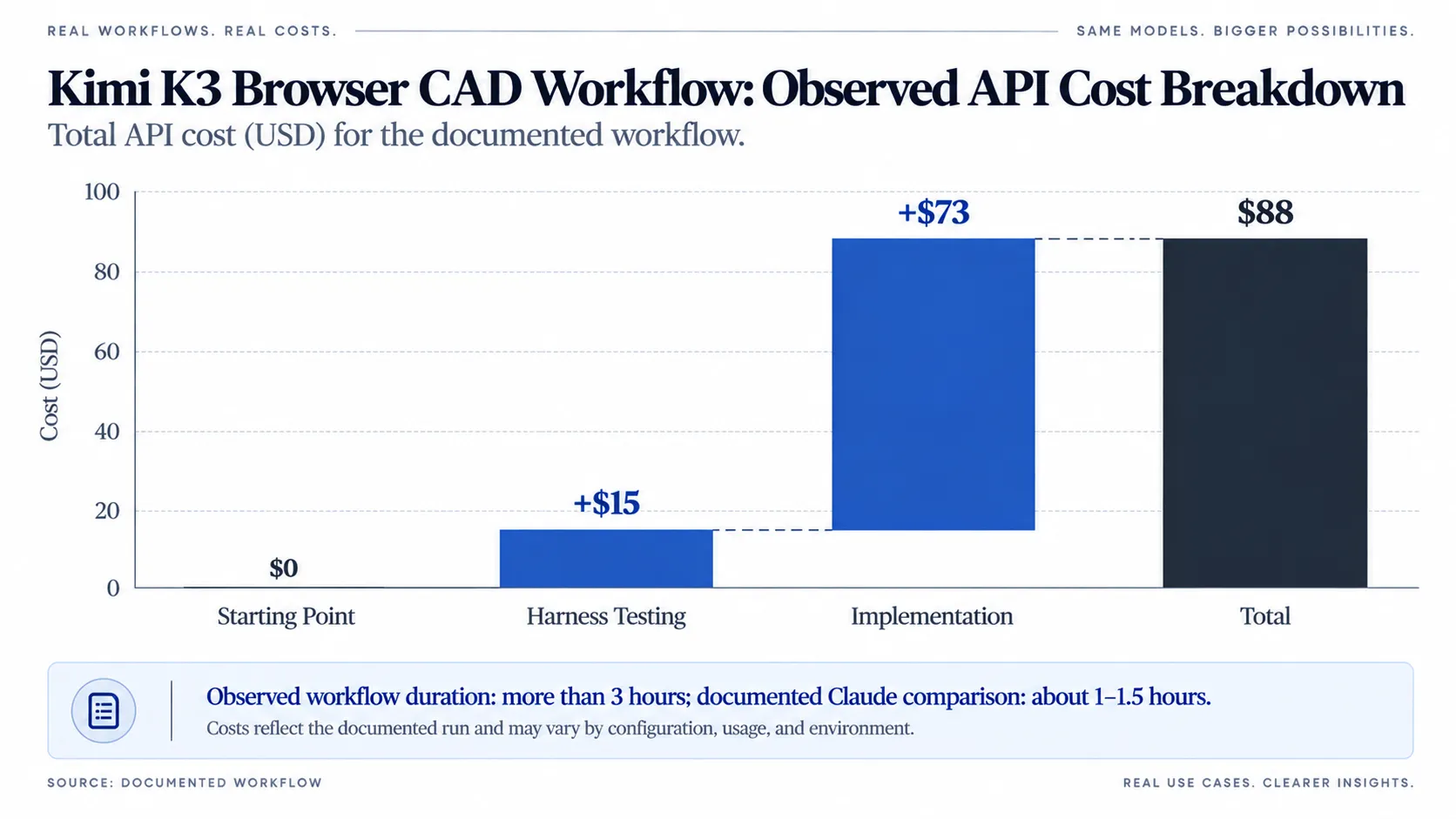
A Kimi K3 coding case shows why. In a TypeScript and three.js browser CAD workflow, harness testing cost about $15 and implementation about $73, for roughly $88 total. The feature was completed, but the workflow took more than three hours, while the documented Claude workflow for similar work usually took around 1–1.5 hours.
It shows why cost per accepted feature can differ sharply from token price.
GPT-5.6 Sol, Opus 5, and Fable 5.1: Frontier GPT-6 Alternatives
GPT-5.6 Sol: The Natural Lower-Cost Astra Alternative
GPT-5.6 Sol is the lowest-friction alternative for teams already using OpenAI. It keeps the same 1.05M context window and 128K maximum output as Astra while reducing current base token rates by 60%.
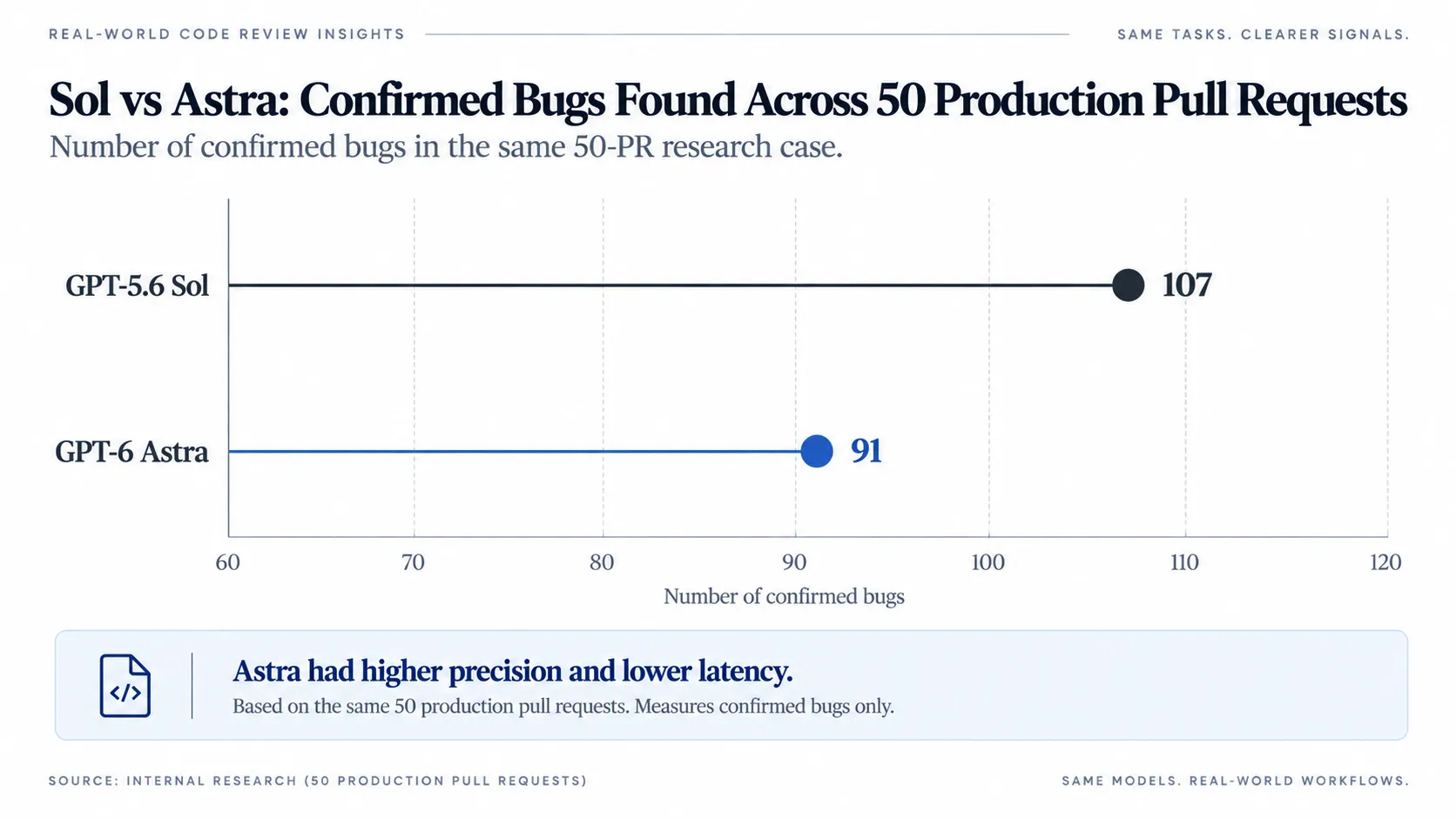
The strongest real-workload evidence in our research came from a review covering 50 production pull requests. Sol identified 107 confirmed bugs, compared with 91 for Astra. Astra delivered higher precision and lower latency, so this is not evidence that Sol is universally stronger. It shows that a cheaper model can remain highly competitive on real code-review work, making the GPT-6 Astra vs GPT-5.6 trade-off workload-dependent.
Separate usage-window research points in the same direction, although it should not be treated as API billing data. In one comparable coding workflow, Astra Low consumed about 10% of a five-hour allowance while Sol High used roughly 5% or less, reinforcing why GPT-6 pricing vs GPT-5.6 matters beyond headline capability.
For predictable coding, review, writing, and analysis, start with Sol and escalate difficult failures to Astra.
Claude Opus 5: Frontier Capability at Half Astra’s Base Price
Claude Opus 5 starts at $5/M input and $25/M output, half Astra’s Standard base token price. It is positioned for coding, agents, and complex professional work.
That makes Opus a useful middle-cost frontier escalation layer for repository-wide debugging, architecture changes, and multi-stage agents. The key question is whether Opus solves failures your cheaper model cannot solve at a lower cost per accepted result.
Claude Fable 5.1: For Long-Running Difficult Work
Fable 5.1 costs $10/M input and $50/M output, so it is not a budget Astra replacement. Its case is instead based on workflow behavior: our reviewed examples most consistently highlighted planning, instruction following, codebase consistency, and coherence across long-running tasks. Because these observations come from workflow reports rather than a standardized head-to-head benchmark, teams should validate Fable against Astra on their own long-running workloads. Fable also prices cache reads at $0.25/M tokens, which can materially change the cost of repeated-context agent workflows.
Gemini, DeepSeek, and GLM: Lower-Cost GPT-6 API Alternatives
Gemini 3.8 Flash: High-Volume Coding Workhorse
Gemini 3.8 Flash currently offers a 1M-token context window at an introductory $0.75/M input and $3.75/M output through December 31, 2026. In another UI coding workflow involving two 20K-token tasks, completion took roughly 45 seconds, although the model used about 5% more tokens than the comparison. Long prompts also exposed a limitation: requests containing five separate tasks sometimes completed only two or three.
Gemini Flash therefore fits best when the plan is clear and the workload is execution-heavy.
DeepSeek V4.1 Flash: Extremely Low API Cost With Harness Risk
DeepSeek V4.1 Flash currently starts at $0.15/M uncached input and $0.60/M output off-peak, with cache-hit input as low as $0.003/M. It supports a 1M context window and tool calls.
The previous V4 Flash generation has been retired, and legacy V4 Flash names are now served by V4.1 Flash. Our earlier V4 Flash workflow research remains useful as integration evidence, but it should not be interpreted as a V4.1 capability benchmark. In one Claude Code setup, configuration took about 10 minutes, and the model was used for roughly one week. It handled around 80% of the routine tasks previously assigned to Sonnet, with many requests completing in single-digit seconds.
Those earlier workflow observations also included missed tool calls, ignored project instructions, premature execution, and overwritten fixes. The broader lesson is that the harness is part of the effective model, so teams should validate current V4.1 tool behavior before routing unattended work to the cheapest endpoint.
GLM-5.3: Reasoning Settings Can Dominate Cost
GLM-5.3 is an open-source 1M-context model, with one current international hosted price at $1.40/M input and $4.40/M output.
Its most useful case in our research shows why reasoning configuration belongs in any API pricing comparison. With the same 44-token prompt, one workflow produced 202 output tokens in 15 seconds at Low, 4,955 tokens in 35 seconds at Max, and 10,579 tokens in 68 seconds when reasoning was left unset.
The input did not change, but output volume increased by more than 52× between the smallest and largest observed result.
For cost-sensitive deployment, reasoning configuration can matter more than the sticker price.
Qwen and Grok: GPT-6 Alternatives for Long Context and Agents
Qwen 3.8 Max: Long Context With a Separate Local Qwen Path
Qwen 3.8 Max supports a 1M-token context window and up to 131,072 output tokens. Alibaba Cloud currently lists $1.65/M input and $4.951/M output in the China Beijing region, with pricing varying by deployment region.
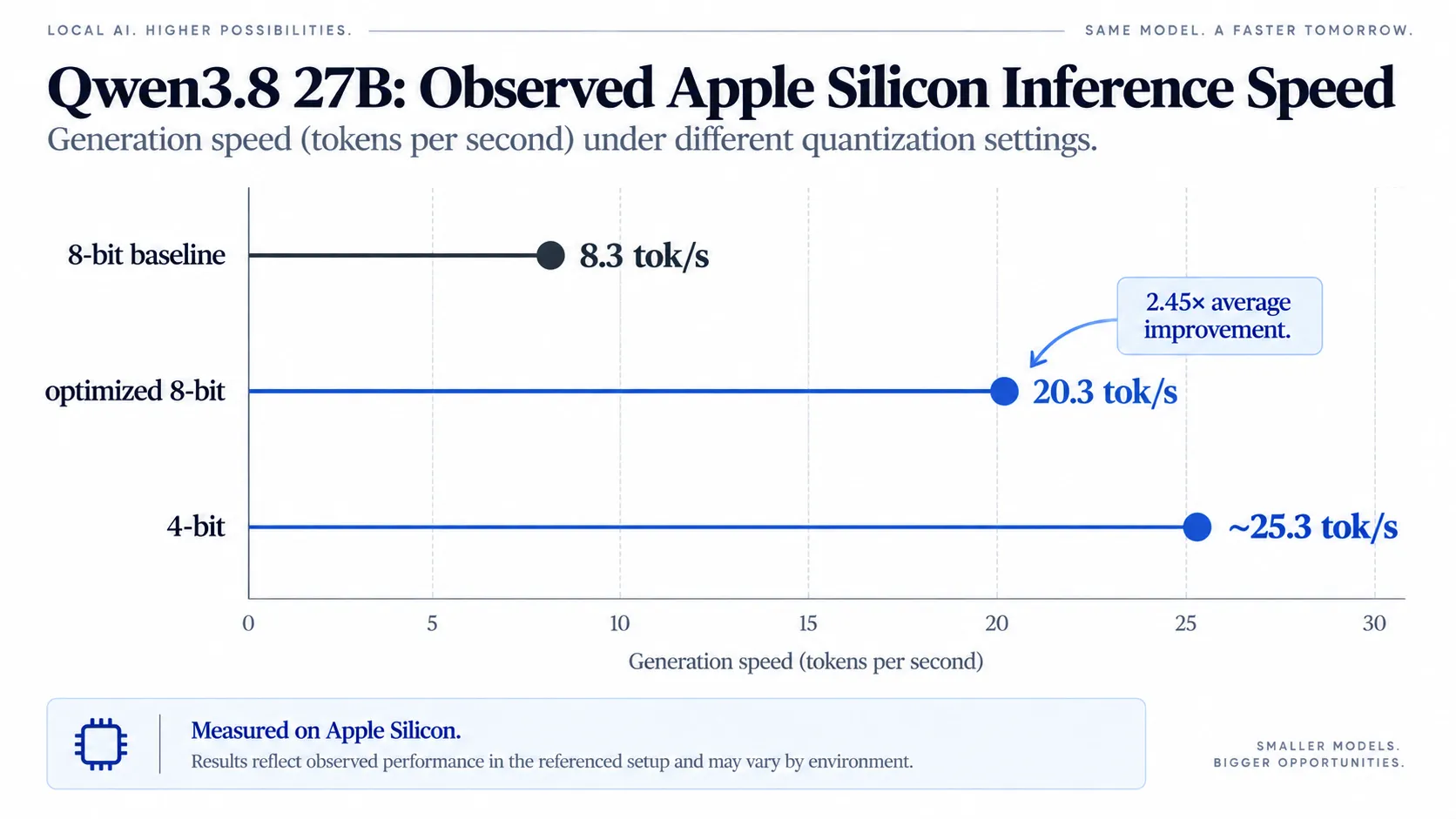
Local deployment is a separate Qwen-family path rather than a performance characteristic of the hosted Qwen 3.8 Max API. In our separate Qwen3.8 27B local-inference research, one Apple Silicon workflow improved 8-bit generation from 8.3 to 20.3 tokens per second, a 2.45× improvement, while 4-bit inference reached about 25.3 tokens per second. Another configuration handled roughly 140K context with about 24GB of VRAM at around 20 tokens per second.
These local-inference results should not be interpreted as Qwen 3.8 Max API performance. They instead show the engineering trade-off of a local Qwen deployment path: quantization, memory, reasoning budgets, and runtime tuning become part of the real cost.
Grok 4.6: Fast Agent Workflows With a Long-Context Caveat
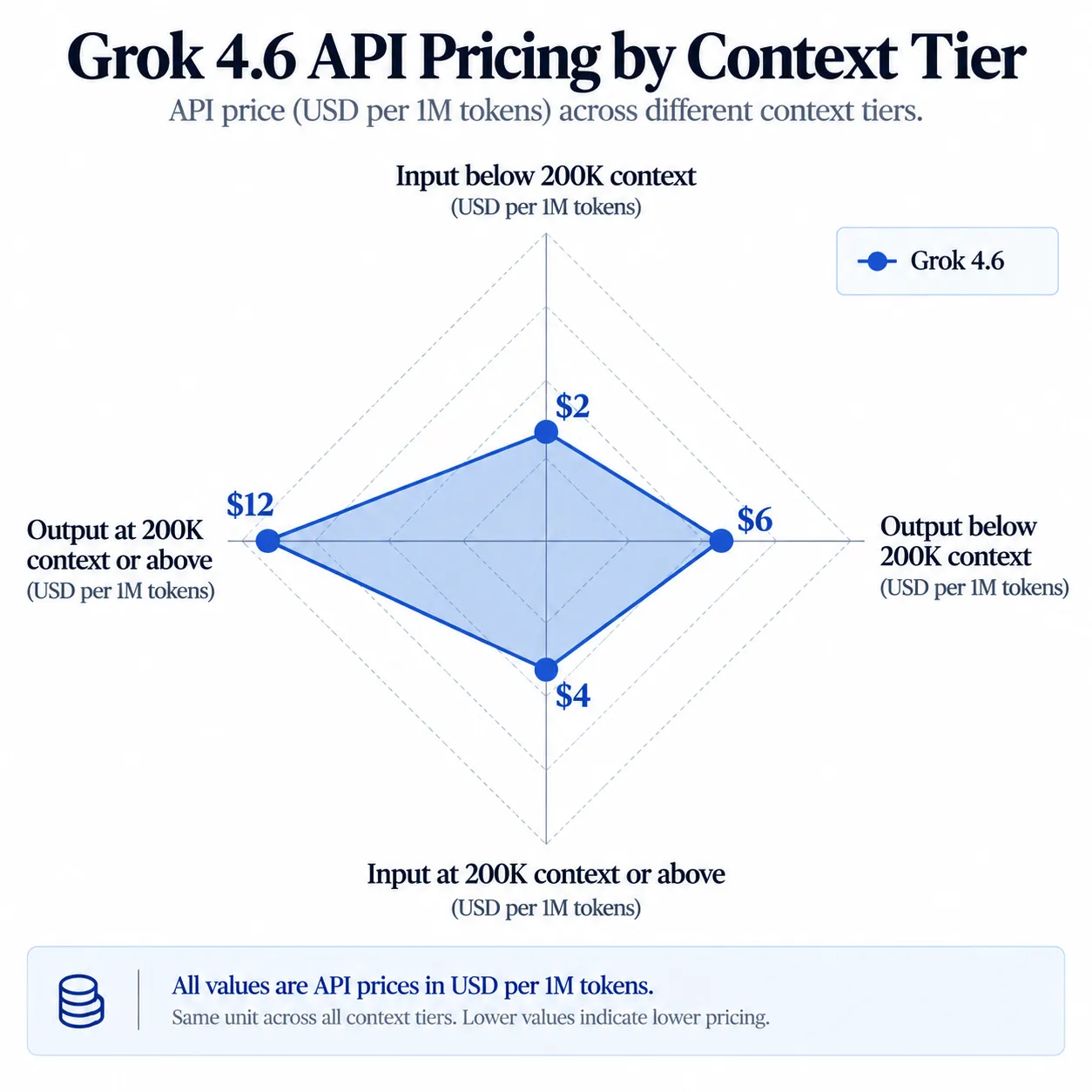
Grok 4.6 costs $2/M input and $6/M output for short-context requests with a 500K context window. At 200K context or above, pricing increases to $4/M input and $12/M output.
In one code-review workflow from our research, Sol identified 8 of 8 issues, while Grok identified 7 of 8 and completed the task faster, although Grok consumed more input tokens.
Separate subscription-use research also showed strong sustained capacity: one workflow covered seven projects at roughly 16 hours per day for four days, while another consumed about 5% of a $30 plan. These observations are usage signals rather than direct API-cost measurements.
Grok is therefore worth testing when latency and sustained agent execution matter, but long-context pricing and token consumption need to be measured alongside speed.
A Better GPT-6 API Strategy: Multi-Model Routing
Use Frontier Models for Planning and Cheaper Models for Execution
The most consistent pattern across our research was frontier planning → lower-cost execution → escalation on failure → frontier or human review.
We found examples of Sol High producing the plan before Gemini handled implementation, Claude-level planning followed by DeepSeek execution and a final audit, and Astra handling architecture or milestone review while Sol performed routine coding.
This avoids paying frontier rates for predictable edits while keeping frontier capability available when failure becomes expensive.
Measure the Harness, Cache, and Provider Too
Our review of user questions also found the same model behaving differently across Claude Code, OpenCode, Aider, routing providers, and direct APIs.
One DeepSeek workflow reported a task costing more than $5 through a routing provider versus under $0.50 through the direct API. This single case is not a universal ratio, but it shows why routing, caching, and infrastructure belong in the evaluation.
The production unit is therefore model + prompt + reasoning setting + harness + tools + cache + provider + routing policy.
How to Choose the Best GPT-6 API Alternative
Choose based on the workload rather than one overall winner:
- GPT-5.6 Sol: routine OpenAI-compatible coding and analysis.
- Claude Opus 5: frontier coding and agents at a lower base price than Astra.
- Claude Fable 5.1: difficult long-running workflows.
- Gemini 3.8 Flash: high-volume execution.
- DeepSeek V4.1 Flash: lowest published token pricing among the options compared here.
- GLM-5.3: workloads where reasoning configuration needs tight cost control.
- Qwen 3.8 Max: long-context hosted workloads.
- Grok 4.6: latency-sensitive agent execution.
FAQ
What is the best GPT-6 API alternative?
GPT-5.6 Sol is the simplest alternative for lower-cost OpenAI workloads, while Opus 5 and Fable 5.1 are stronger candidates for frontier work. Gemini, DeepSeek, GLM, Qwen, and Grok become more attractive when throughput, cost, context, or deployment flexibility matters. For production, our research most strongly supports routing tasks rather than choosing one permanent replacement.
Is Sol good enough to replace Astra?
Sol can replace Astra for many routine coding, review, analysis, and professional workloads. It currently costs $4/M input and $20/M output under promotional pricing, versus Astra’s $10/$50. In our 50-PR research case, Sol found 107 confirmed bugs versus Astra’s 91, although Astra achieved higher precision and lower latency.
What is the cheapest GPT-6 API alternative?
DeepSeek V4.1 Flash has the lowest published hosted token rates among the major alternatives compared here, starting at $0.15/M uncached input and $0.60/M output off-peak. However, retries, reasoning volume, tool failures, and supervision can erase the apparent savings.
Should I replace Astra or use multiple models?
For coding and agent workflows, a multi-model strategy is often more economical. Start predictable tasks on a lower-cost model, validate the output, and escalate failed attempts, architecture decisions, difficult debugging, or high-risk work to Astra or another frontier model.
Is a local GPT-6 alternative cheaper than an API?
Not automatically. Local models remove per-call billing but add hardware, memory, power, runtime tuning, maintenance, and engineering costs. They become more compelling when privacy, offline operation, control, or consistently high utilization matters.
Conclusion
There is no single GPT-6 API alternative that is cheapest for every workload. Use GPT-5.6 Sol for lower-cost OpenAI-compatible work, Opus 5 or Fable 5.1 for harder frontier tasks, Gemini 3.8 Flash for high-volume execution, DeepSeek V4.1 Flash when minimizing published token cost is the priority, GLM-5.3 when reasoning cost needs tighter control, Qwen for long-context or local-deployment paths, and Grok when agent speed matters. The production metric that matters most is cost per successfully completed task—not token price alone.