The best free Claude Fable 5.2 alternatives include Gemini 3.8 Flash, Gemini 2.5 Pro, GLM-5.3 Flash Free, DeepSeek V4.1 Flash Free, Nemotron 3 Ultra Free, Qwen, and Gemma. Gemini is a practical starting point for free cloud API access, OpenCode offers free models for terminal coding, and Qwen or Gemma can run locally without metered cloud token charges. If you want the original Fable 5.2 for less, LinkModel provides another option.
The problem is that free AI does not always mean lower total costs. Cloud APIs impose usage limits, some free models are temporary, and local inference requires hardware. Our review of developer questions found reports of exhausted coding allowances, repeated debugging failures, and changing free-model availability. When a task takes hours of extra work, saving on tokens alone may not be worthwhile.
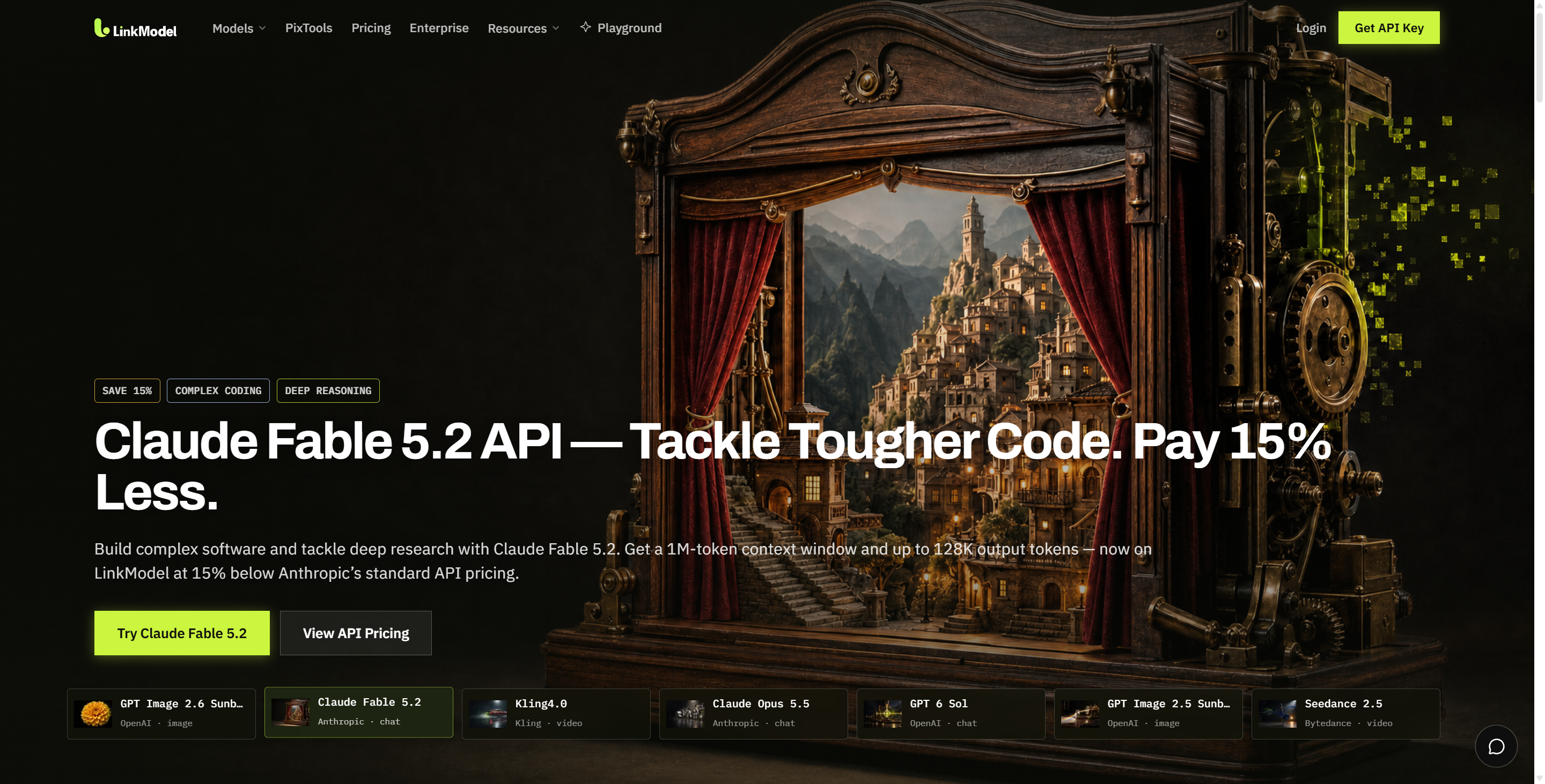
LinkModel offers the original Claude Fable 5.2 API for 15% less than Anthropic's standard rates: $6.80/M input tokens and $34/M output tokens. Explore the full Fable 5.2 pricing breakdown alongside supported text, image, and video models, with $0 minimum spend and $0 monthly platform fee. New users automatically receive $1 in free Credits through LinkModel's Fable 5.2 Free API access, with no card or recharge required. This one-time new-user credit cannot be claimed repeatedly, does not expire, and works across all currently available models. Try Fable at a lower price, explore other models, and pay according to actual usage.
What Are the Best Free Claude Fable 5.2 Alternatives?
There are seven free-model options worth considering, plus a different approach for people who want to keep using Fable itself: access the original model through LinkModel at a lower published price.
That distinction matters. A genuinely free model can be an excellent choice for everyday tasks, but an alternative API platform may be more useful when you need the original model's capabilities or want to compare different model families.
Claude Fable 5.2 Alternatives Compared
| Option | Access type | Best use | Main consideration |
|---|---|---|---|
| LinkModel | $1 new-user Credits, then low-cost API | Original Fable 5.2 and multiple AI models | Pay-as-you-go after Credits |
| Gemini 3.8 Flash | Eligible free API tier | Coding, reasoning, agents | Usage quotas |
| GLM-5.3 Flash Free | OpenCode free model | Terminal coding | Limited-time access |
| DeepSeek V4.1 Flash Free | OpenCode free model | Everyday development | Limited-time access |
| Nemotron 3 Ultra Free | Free API model | Agent and long-context experiments | Request limits |
| Qwen | Local open models | Self-hosted coding | Hardware requirements |
| Gemma | Local open models | Creative writing and text tasks | Local computing resources |
| Gemini 2.5 Pro | Eligible free API access | Complex reasoning | Free-tier limits |
For a free cloud API, start with Gemini 3.8 Flash. For a terminal coding assistant, consider GLM or DeepSeek through OpenCode. For local inference, evaluate Qwen or Gemma. For the original Fable 5.2 at a lower price, consider LinkModel.
These are workload recommendations rather than a claim that any free model matches Fable 5.2 on every benchmark.
What Makes a Claude Alternative Worth Using?
The most useful comparison considers four factors: task quality, available usage, workflow compatibility, and total cost.
A free model may be sufficient for explaining a function or rewriting a paragraph. It may be less practical for an autonomous agent that needs dozens of requests, a difficult repository migration, or a large debugging task.
Likewise, a self-hosted model may be economical for repeated tasks when suitable hardware already exists, but less convenient for someone who wants immediate cloud access.
The question is therefore not simply which model is free? It is which option completes the work you need without creating more expensive problems?
Is Claude Fable 5.2 Free, and Why Are Users Looking for Alternatives?
Claude Fable 5.2 is not part of Claude's Free plan. Anthropic makes it available through eligible paid subscriptions and developer API access.
Released in November 2026, Fable 5.2 targets advanced technical work, including complex software engineering, scientific reasoning, and long-running agent tasks. Anthropic lists a one-million-token context window and standard API prices of $8 per million input tokens and $40 per million output tokens.
What Can Claude Fable 5.2 Do That Matters for Developers?
Anthropic's published evaluation results provide context for why developers may want to retain Fable rather than replace it with a different model.
| Anthropic evaluation | Fable 5.2 published result |
|---|---|
| FrontierCode 2.0, Xhigh effort | 49.1% |
| FrontierSWE v2 | 69.9% |
| AutomationBench | 51.4% |
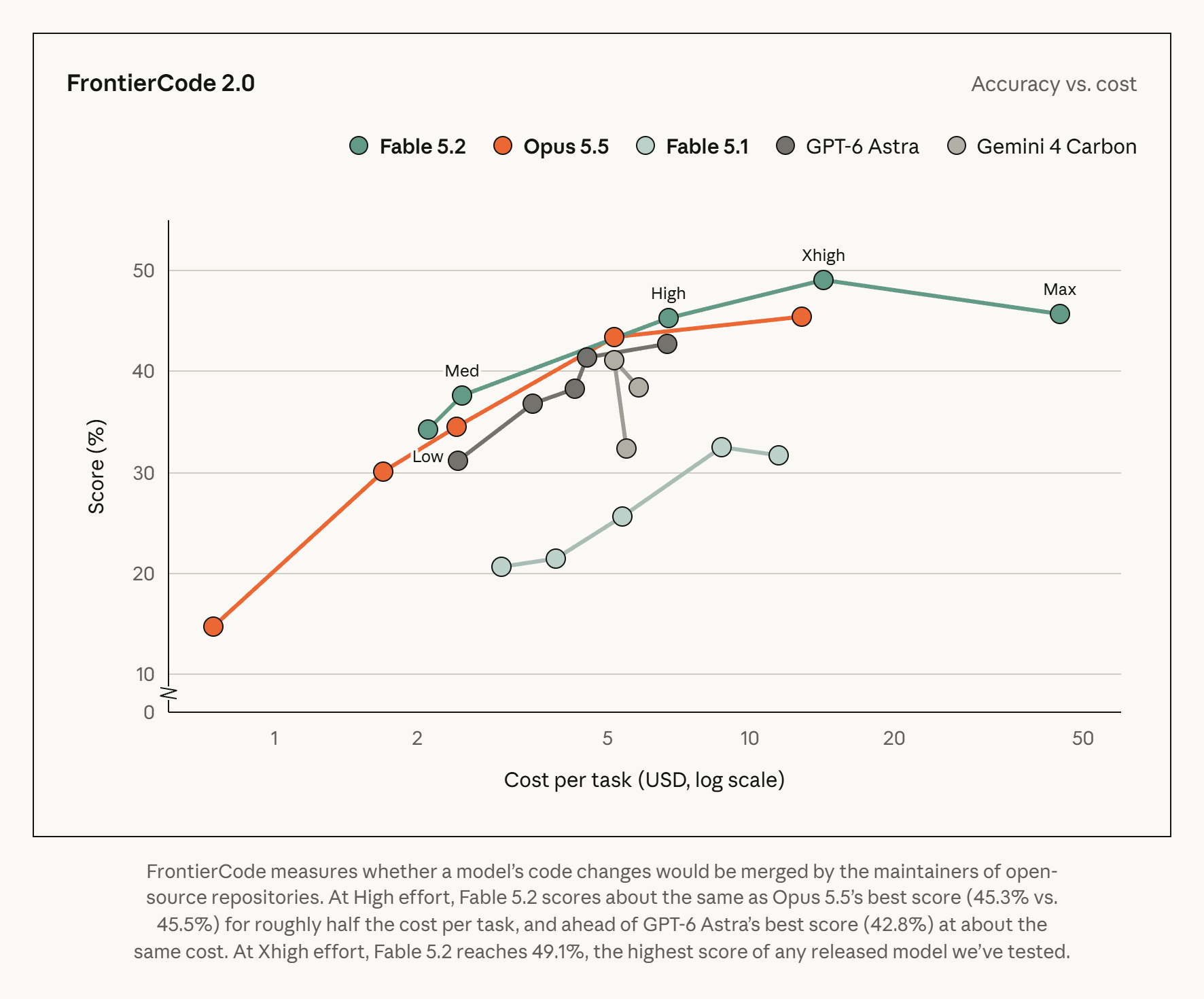
These evaluations address different tasks and measurement conditions. They are Anthropic's reported results, not scores from a unified comparison against the seven free alternatives in this article.
The practical implication is that a model chosen for difficult engineering work should be judged by its ability to reason through changes, maintain relevant context, and complete a task—not merely by its per-token cost.
For simpler requests, those advanced capabilities may be unnecessary. For difficult technical tasks, the difference in completion quality can matter.
Developers interested in the tradeoff between model performance and cost can also explore the Claude Fable 5.2 vs. Opus 5.5 comparison for a more focused look at Anthropic's model lineup.
Why Developers Search for Free Fable 5.2 Alternatives
Our review of developer questions found recurring concerns about usage allowances, cost predictability, and the effort required to change workflows.
One particularly striking reported experience involved a $20 Claude subscription exhausting its five-hour Fable usage allowance in approximately three minutes.
Another account described consuming roughly 45% of a refreshed allowance while continuing an existing task.
These examples show why subscription access and uninterrupted working capacity are different considerations.
A coding agent may read project files, propose edits, call tools, inspect test results, and revise its response several times. A single visible assignment can generate substantial model activity.
For occasional requests, a free model may solve the problem. For sustained work, developers need to consider whether a free quota or subscription allowance can support the entire workflow.
Why the Cheapest Model Can Cost More to Use
A low-priced or free model is not necessarily the lowest-cost way to complete an assignment.
Our research includes an account of a difficult Linux ISO compilation issue in which a developer reported spending more than eight hours working with a weaker model. After moving to Fable, the issue was reportedly resolved in fewer than ten minutes.
This does not establish a universal performance ratio. The project, prompts, and full execution history were not standardized across models.
But it illustrates an important economic factor: the cost of developer time can exceed the cost of model inference.
For that reason, a useful Claude alternative comparison must consider task completion and human rework alongside nominal API prices.
Seven Free Claude Fable 5.2 Alternatives and One Lower-Cost Fable Option
The following choices are ordered to help readers explore genuine free options first, discover a lower-cost route to the original model, and then consider additional free cloud and local approaches.
Gemini 3.8 Flash: Best Starting Point for Free Cloud API Access
Gemini 3.8 Flash is a practical choice for developers who want to experiment with coding and agent workflows through a free cloud API.
Google positions the model for software engineering, autonomous agents, and complex workflows. Its eligible API Free Tier includes free input and output tokens, subject to account and model restrictions.
A suitable use case is iterative code analysis: asking the model to explain a function, identify likely defects, suggest a modification, and evaluate test output.
This works particularly well for experiments where a developer can independently verify each result.
Gemini also avoids the setup demands of local inference.
The important limitation is throughput. Google applies usage limits that can depend on the selected model and project.
A free tier that handles occasional requests may not sustain an agent that repeatedly calls the model throughout the day.
Best for: Cloud coding experiments, reasoning tasks, and early-stage agent prototypes.
Main tradeoff: Free inference is attractive, but sustained use depends on the available quota.
Developers who want to compare model options beyond Google's free tier can also explore the Gemini 3.8 Flash model available through LinkModel.
GLM-5.3 Flash Free: Best for Free Terminal-Based Coding
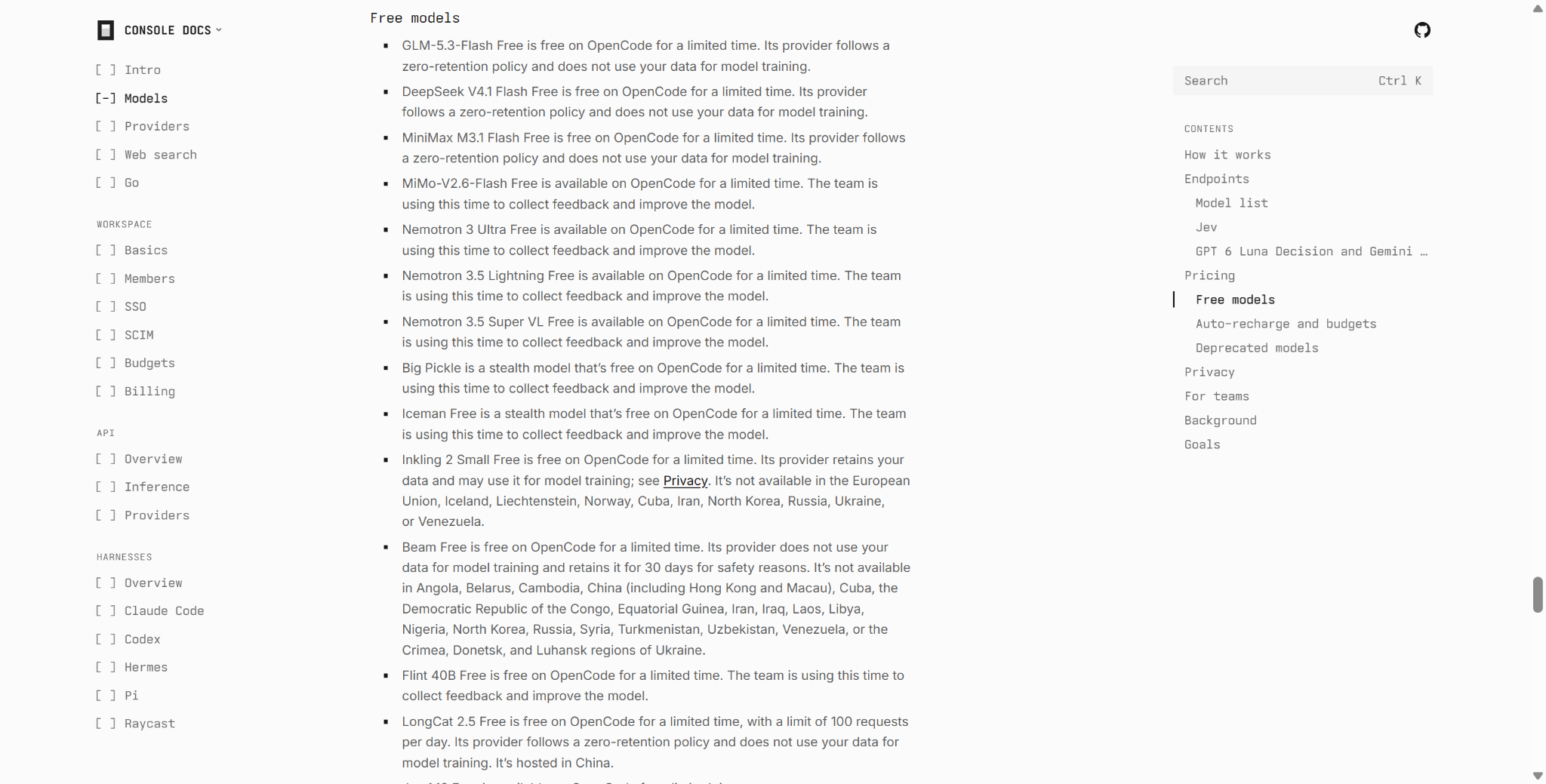
GLM-5.3 Flash Free is listed among OpenCode's free models, making it a relevant option for developers who prefer terminal-based coding assistance.
OpenCode provides a coding environment that works with different model backends. This matters because users searching for a Claude alternative may want to preserve their development habits rather than switch to another web chat interface.
Consider a developer investigating a failing test in an existing repository. A terminal-oriented assistant can support code inspection, proposed changes, and iterative troubleshooting within the development workflow.
Our review also identified a developer project that connected alternative model backends to Claude Code-style tooling. Its supported services included NVIDIA NIM, OpenRouter, and local LM Studio inference. The developer described a 40-request-per-minute free NVIDIA NIM allowance in the configuration available when the project was published.
That example highlights demand for changing inference backends while keeping a familiar coding interface.
OpenCode currently describes GLM-5.3 Flash Free as a limited-time free offering, so developers should check its current listing before depending on it for long-term work.
For a broader explanation of the available access routes and restrictions, see the GLM-5.3 Flash free access comparison.
Best for: Terminal coding and experimentation with alternative coding models.
Main tradeoff: The free access arrangement is not guaranteed to remain available indefinitely.
DeepSeek V4.1 Flash Free: Best for Everyday Coding Tasks
DeepSeek V4.1 Flash Free is another currently listed OpenCode free model.
It is worth considering for routine software-development tasks such as explaining unfamiliar functions, suggesting small refactors, identifying edge cases, and reviewing error messages.
For example, a developer can use a free model to inspect a validation function and suggest improvements, then run existing tests to check whether the recommendations are correct.
This kind of task has a clear verification path, which reduces the risk of relying on an alternative model.
Complex multi-file engineering is different. A model may fix one issue while introducing another, causing repeated cycles of debugging and review.
Our research into developer experiences found this to be an important source of hidden cost.
OpenCode identifies the free DeepSeek offering as temporary. The free listing should not be interpreted as a promise that every DeepSeek API deployment has zero token charges.
Developers can examine the differences between free availability and paid model access in the DeepSeek V4.1 Flash Free API guide.
Best for: Routine development assistance and easily verifiable code tasks.
Main tradeoff: Free access and useful everyday coding ability do not establish reliable completion of difficult engineering work.
LinkModel: Best for Using the Original Fable 5.2 at a Lower Price
What if the better alternative is not replacing Fable 5.2, but paying less to access the model you already want?
LinkModel offers the original Claude Fable 5.2 at $6.80 per million input tokens and $34 per million output tokens, compared with Anthropic's standard $8 and $40.
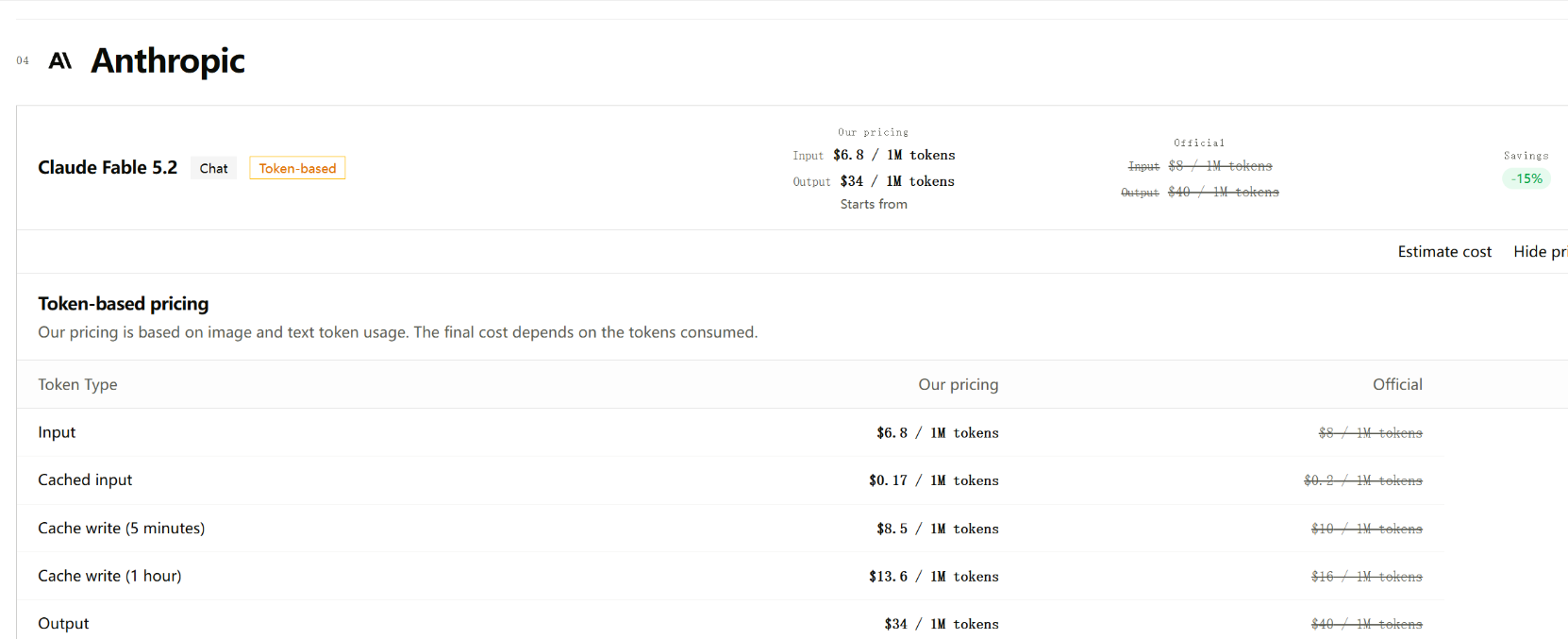
That is a 15% reduction in the corresponding standard API token prices.
| Token category | Anthropic official | LinkModel |
|---|---|---|
| Input / 1M tokens | $8.00 | $6.80 |
| Cached input / 1M tokens | $0.20 | $0.17 |
| Cache write, 5 minutes / 1M tokens | $10.00 | $8.50 |
| Cache write, 1 hour / 1M tokens | $16.00 | $13.60 |
| Output / 1M tokens | $40.00 | $34.00 |
For a workload using two million ordinary input tokens and 500,000 output tokens, Anthropic's standard price totals $36, while LinkModel totals $30.60, a difference of $5.40.
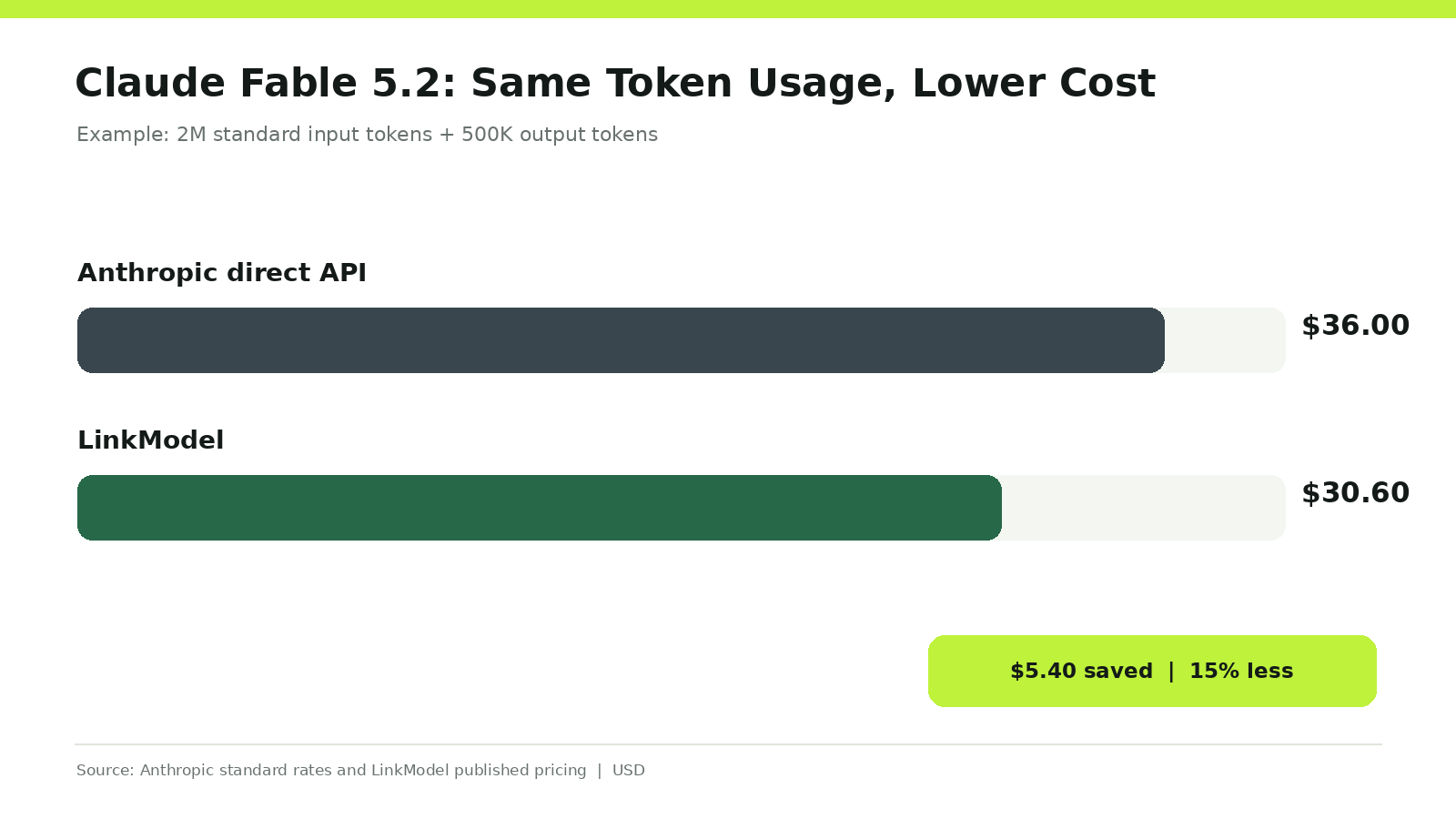
This option is particularly relevant when a free model repeatedly struggles with a task and the developer already has a reason to use Fable itself.
LinkModel also brings together multiple supported language, image, and video models on one platform. Its Playground supports model exploration, while its API offers an OpenAI-compatible integration route.
Instead of managing separate provider relationships for every AI task, developers can choose among supported model families through a unified platform.
New users receive $1 in Credits automatically, with no card binding or recharge required.
At the published Fable 5.2 standard rates, a request using 10,000 input tokens and 2,000 output tokens costs $0.136. The $1 credit therefore covers seven complete requests of that size.
A lighter request using 2,000 input tokens and 500 output tokens costs $0.0306, allowing 32 complete equivalent requests within $1.
These examples give cost-sensitive readers a concrete way to evaluate the initial offer.
Best for: Developers who want the original Fable 5.2 for less, need access to several AI model families, or prefer pay-as-you-go usage without a monthly platform fee.
Main tradeoff: LinkModel is a discounted API access platform, not an unlimited free model.
Nemotron 3 Ultra Free: Best for Limited Agent API Experiments
Nemotron 3 Ultra Free is available through OpenRouter's free-model collection.
It is relevant to developers exploring agent workflows, long-context reasoning, and API-based automation without ordinary per-token model charges.
OpenRouter's standard free-model limits are 20 requests per minute and 50 requests per day, with a higher daily allowance for qualifying accounts.
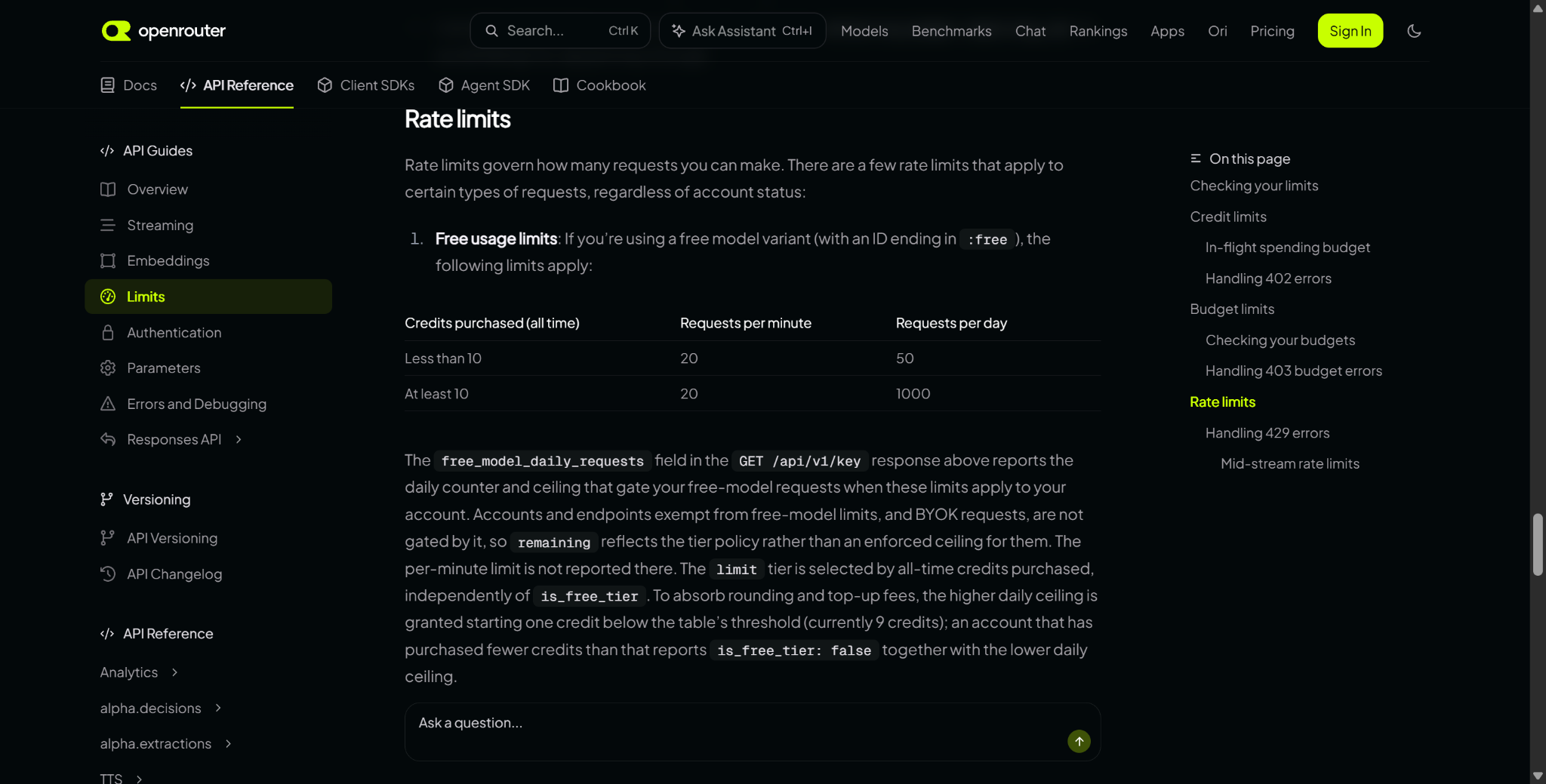
The daily request budget can become important for agents that repeatedly interact with a model.
| Requests per task | Maximum tasks from 50 requests |
|---|---|
| 2 | 25 |
| 5 | 10 |
| 10 | 5 |
| 25 | 2 |
For example, if an agent needs ten requests per completed task, five such tasks consume the entire standard 50-request allowance.
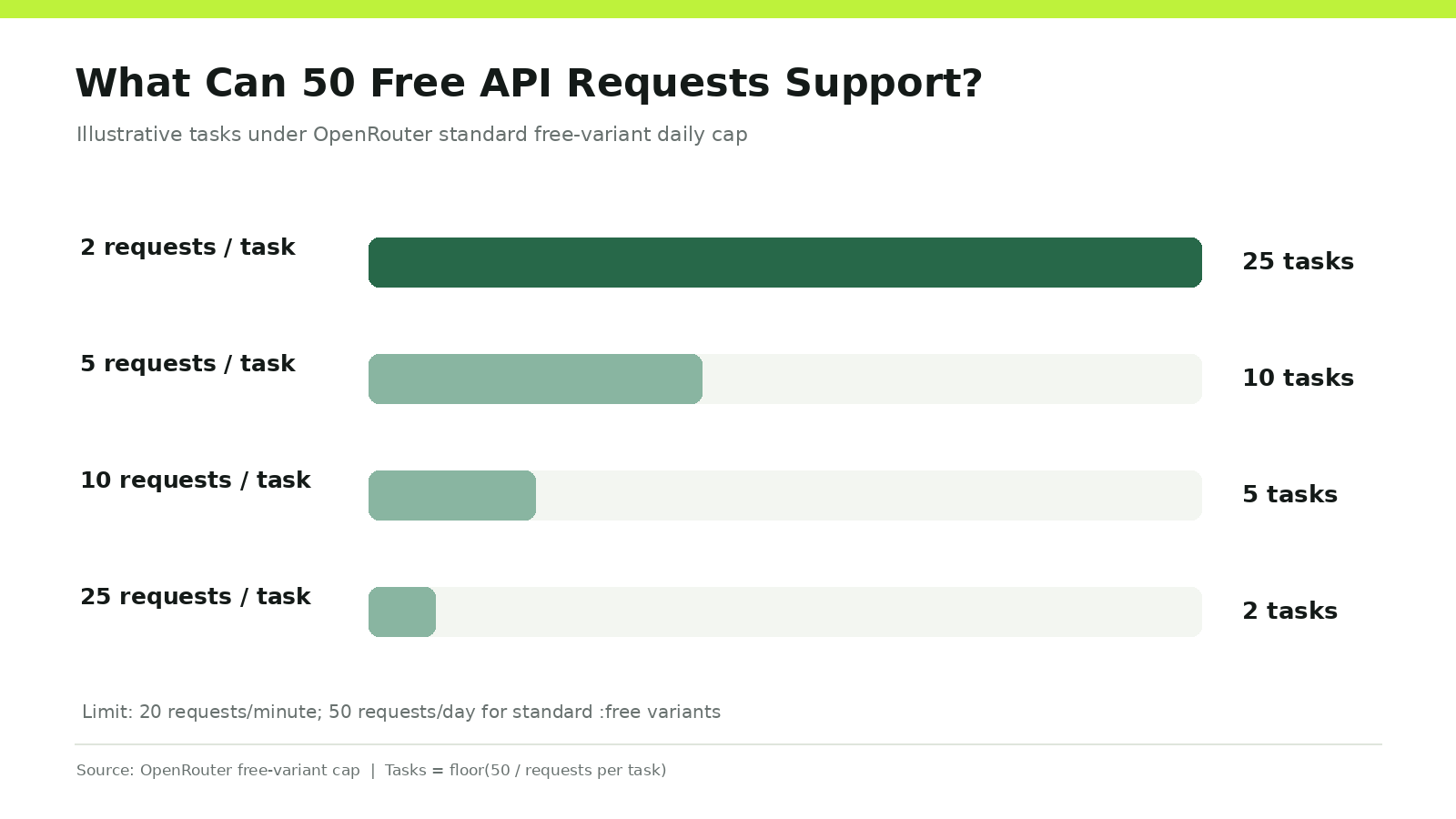
This calculation describes request capacity, not task success rates. Some workflows may require additional requests or retries.
For a deeper explanation of how quotas affect applications, the AI API rate limits guide covers common usage constraints and request-management considerations.
Best for: Individual agent prototypes and controlled long-context experiments.
Main tradeoff: Free token pricing does not remove daily request restrictions.
Qwen Local Models: Best for Self-Hosted Coding
Locally hosted Qwen models offer a different way to avoid recurring API charges.
Instead of using a hosted inference service, the developer runs a model on personal or organizational hardware.
Our research identified a relevant development case using Qwen3.5 35B A3B locally with coding tools.
The developer described working on a personal project involving tool interactions, code generation, and verification.
A usage-tracking utility estimated $10.85 in equivalent Claude Sonnet 4.6 API charges for the session's token usage, while local inference generated no metered cloud API bill.
The original account also corrected an initial throughput estimate after reviewing KV-cache-related token accounting.
The useful takeaway is not that Qwen equals Fable 5.2 in overall performance. It is that local inference can change the recurring cost structure for workloads a self-hosted model can complete.
Hardware still matters. Larger Qwen variants may require substantial memory, compatible GPUs, and careful configuration.
Developers comparing self-hosted inference with hosted model access can also explore the Qwen alternatives guide for additional model-selection context.
Best for: Developers with suitable existing hardware and frequent local coding tasks.
Main tradeoff: Avoiding cloud token charges comes with hardware, setup, and model-capability considerations.
Gemma Local Models: Best for Creative Writing and Local Text Work
Gemma offers downloadable model variants for local text processing, writing assistance, and other language tasks.
It is particularly relevant to users who want to reduce dependence on changing cloud free-tier policies.
Our review of writing-related user questions found an account describing repeated changes in model access while searching for a reliable creative-writing assistant.
The user reported increasingly restrictive Kimi allowances and difficulties maintaining a preferred writing workflow across services.
Other participants recommended local Gemma models as an alternative.
For an author developing characters, maintaining narrative continuity, or repeatedly revising a manuscript, consistent access can matter as much as a model's performance on an isolated prompt.
Running a suitable Gemma model locally can reduce reliance on cloud API quotas.
However, local output quality depends on the selected model variant and the available hardware. A small model should not be assumed to match a frontier model on demanding reasoning or long-context tasks.
Users comparing local writing options with hosted alternatives can explore the Gemma alternatives guide for additional context.
Best for: Self-hosted writing, summarization, and personal text workflows.
Main tradeoff: Local availability is attractive, but hardware requirements and model capability remain important.
Gemini 2.5 Pro: An Additional Free Option for Complex Reasoning
Gemini 2.5 Pro remains relevant to users who need a reasoning-oriented model for document analysis, code review, or demanding technical questions.
Google's published pricing includes eligible free-tier access.
A representative workflow is reviewing several related source files, identifying dependencies, and producing a structured explanation of a difficult issue.
For occasional use, a free reasoning model may be more economical than purchasing expensive API capacity.
Google's official deprecation list did not announce a shutdown date for the stable Gemini 2.5 Pro model at the time of this review. As with other hosted models, developers should monitor current availability and model-specific restrictions.
Readers comparing access arrangements and costs can also consult the Gemini 2.5 Pro API pricing guide.
Best for: Complex reasoning and code analysis within eligible free-tier limits.
Main tradeoff: Free access has capacity constraints, and newer models may provide a better starting point for some new workflows.
Free Claude Fable 5.2 API vs. Local Models vs. Claude Code Alternatives
A free Claude alternative may refer to a cloud API, a locally hosted model, or a coding tool that works with another model provider.
These are distinct choices with different expenses and practical limitations.
Which Free Claude Alternatives Actually Offer API Access?
Gemini's eligible API Free Tier provides cloud inference without ordinary input and output token charges within its conditions.
OpenRouter provides explicitly free model variants, with request limits that can restrict repeated automated use.
OpenCode lists several free models within its coding service, including GLM-5.3 Flash Free and DeepSeek V4.1 Flash Free.
Qwen and Gemma are different: local inference removes metered cloud API charges but requires a runtime and suitable computing resources.
LinkModel provides usage-based access to paid models, supported by an initial $1 new-user credit.
| Access route | How inference is paid for | Primary limitation |
|---|---|---|
| Gemini Free Tier | Free within eligibility | Project and model limits |
| OpenCode free models | Free during listed access period | Availability conditions |
| OpenRouter free variants | Zero model-token price | Request limits |
| Local Qwen or Gemma | No cloud inference bill | Hardware and operation |
| LinkModel | Free initial Credits, then usage-based | Paid token consumption |
This distinction is essential when selecting an alternative for an application rather than a one-off chat session.
Can You Keep a Claude Code-Style Workflow?
Yes. Developers can use other coding clients, and some compatibility projects connect alternative inference services to Claude Code-style interfaces.
OpenCode is one option for terminal-oriented development with multiple models.
A compatible inference backend and a coding tool are separate components, so changing the model does not necessarily mean abandoning every part of the working environment.
Our review found a developer project connecting different backends, including NVIDIA NIM, OpenRouter, and local inference, to a familiar coding workflow.
For applications already designed around OpenAI-compatible APIs, LinkModel also provides a route to multiple supported model families.
Developers exploring coding-agent alternatives can review the best coding LLM API guide for model-selection considerations.
However, model-specific tool calling, context handling, and coding-client integration should be checked against the selected configuration.
The goal is to preserve useful parts of the workflow while choosing an inference service that meets the task's requirements.
Is Local AI Really Cheaper Than Cloud AI?
Local inference can remove recurring metered cloud token charges, but that does not make every local deployment less expensive.
A developer with sufficient existing hardware may find self-hosting attractive for frequent code explanations, text generation, and other suitable tasks.
Someone without compatible hardware may face a significant upfront investment.
Cloud free tiers avoid local hardware setup but depend on quotas. Paid cloud access avoids self-hosting requirements and may provide access to models that are impractical to run locally.
The better comparison is total cost over the expected workload, including hardware, recurring inference charges, setup time, and the effort needed to achieve correct results.
What Our Research Found About Real-World Claude Alternatives
Our review of developer experiences and user questions identified five recurring lessons about choosing a Claude Fable 5.2 alternative.
Case Study: Three Minutes to Exhaust a Five-Hour Allowance
A Fable 5.2 user reported exhausting a five-hour subscription usage allowance in approximately three minutes.
The reported session involved a $20 subscription, and the remaining allowance declined from full to zero.
This case illustrates a practical distinction between paying for model access and having enough capacity for a continuous workload.
A developer performing several rounds of repository analysis, code changes, and test corrections can consume usage more quickly than someone asking a few ordinary questions.
For these users, model availability and predictable spending may be important alongside quality.
Research finding: Evaluate the amount of uninterrupted work a plan can support, not simply its monthly price.
Case Study: Local Qwen and an Estimated $10.85 Cloud Cost
The local Qwen3.5 35B A3B development example demonstrates another cost structure.
The developer reported using the model for tool-based programming work, while a usage tracker estimated $10.85 in equivalent Claude Sonnet 4.6 API charges.
Local inference avoided the corresponding metered cloud expense.
However, the model ran on available computing resources, and its suitability depended on the tasks it could complete.
Research finding: Self-hosting can be economical for frequent suitable workloads, especially when the required hardware already exists.
Case Study: More Than Eight Hours of Debugging Versus Ten Minutes
In a difficult Linux ISO compilation case, a developer described spending more than eight hours addressing recurring problems with a weaker model.
After switching to Fable, the developer reported completing the repair in fewer than ten minutes using two prompts.
The example highlights a cost that conventional API comparison tables often overlook: human debugging effort.
For simple tasks, a free model may be sufficient. For complicated engineering problems, fewer unsuccessful attempts can be more valuable than a lower token price.
Research finding: Compare cost per successfully completed task, not just cost per model request.
Case Study: Changing Free Limits in Creative Writing
Our review found users who valued free AI writing assistance but struggled with changing access policies.
One account described the difficulty of finding a model suitable for recurring creative projects while encountering tighter quotas and model availability changes.
For longer writing projects, reliable access and consistency can influence the choice as much as model quality.
Local Gemma models offer one way to reduce dependence on changing cloud quotas.
Research finding: A free model is most useful when its availability supports the full creative workflow.
Case Study: Switching Inference Without Rebuilding the Coding Environment
Another developer project described connecting alternative model backends to Claude Code-style tools.
The project supported multiple inference routes and documented a free backend configuration with a reported 40-request-per-minute allowance at the time.
The broader lesson is that the coding interface and the inference provider do not always have to be the same product.
That matters for developers who want lower-cost models without relearning their entire working environment.
Research finding: Workflow compatibility should be treated as a core selection factor rather than an afterthought.
When Is a Cheaper Claude Fable 5.2 API Better Than Free Models?
The simplest decision is to use free inference when it reliably completes the work, and pay for stronger inference when the additional capability is worth the expense.
A free model can be an excellent choice for low-risk tasks. A more capable paid model may become worthwhile when debugging time, quality requirements, or repeated failures make free inference inefficient.
When Should You Stick With a Free Alternative?
Choose a free model when the task is small, easy to validate, and within available quotas.
Examples include code explanations, document summaries, routine text generation, and experiments with agent behavior.
Local Qwen or Gemma may also be worthwhile for repeated tasks when sufficient hardware is available.
If a free model consistently delivers correct results, paying for Fable 5.2 may provide little additional value for that workload.
How Much Can LinkModel Save on Fable 5.2?
For developers who specifically want the original Fable model, LinkModel's standard price difference is measurable.
| Example workload | Anthropic standard API | LinkModel | Difference |
|---|---|---|---|
| 1M input + 100K output | $12.00 | $10.20 | $1.80 |
| 2M input + 500K output | $36.00 | $30.60 | $5.40 |
| 5M input + 1M output | $80.00 | $68.00 | $12.00 |
| Ten repetitions of the second workload | $360.00 | $306.00 | $54.00 |
These scenarios use ordinary input and output token quantities without additional cache usage.
The savings do not depend on changing to a different model.
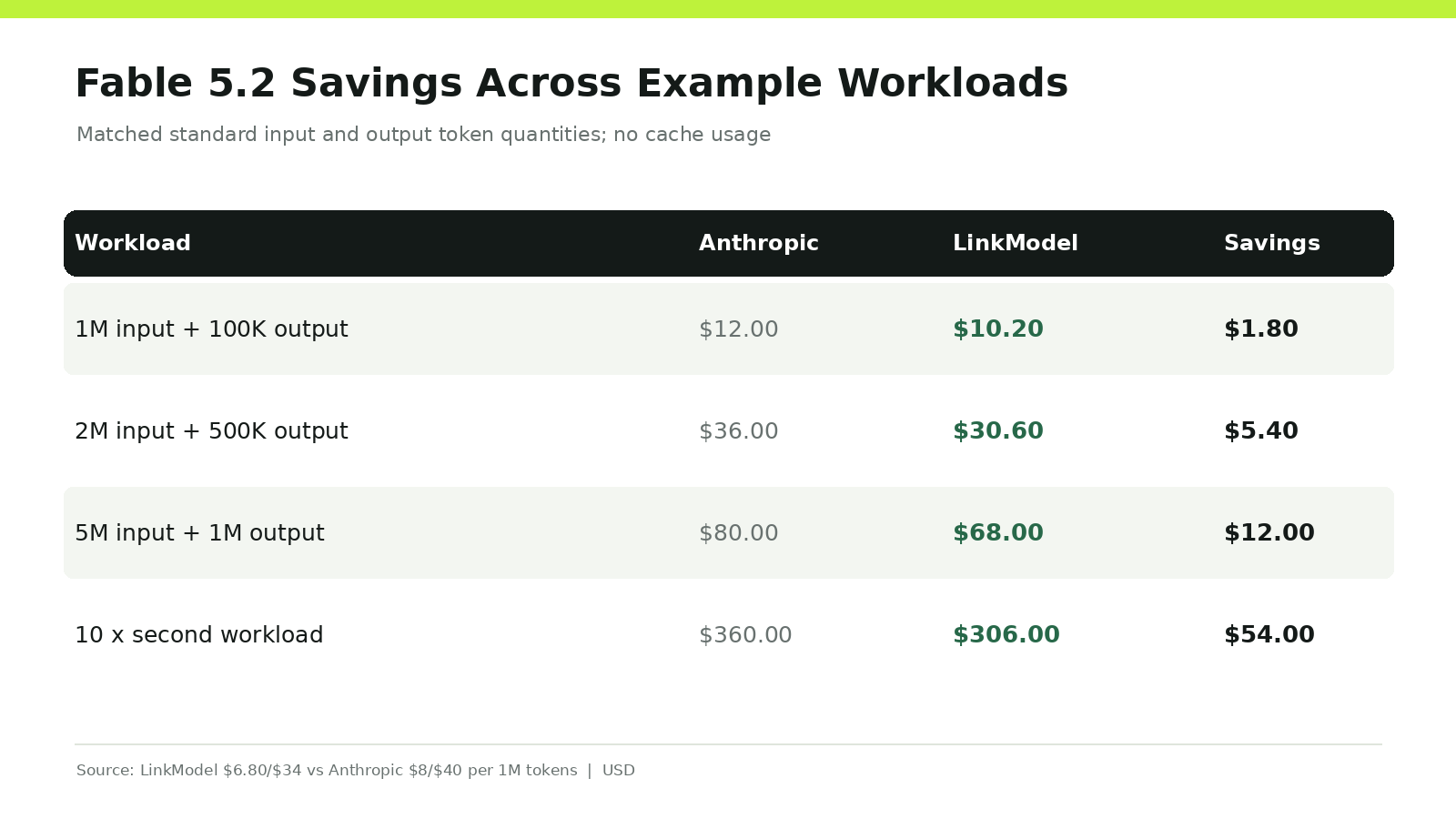
They result from accessing the same Fable 5.2 model at LinkModel's lower published token prices.
Developers optimizing larger workloads can explore additional strategies in the AI API cost reduction guide.
Why Does a Multi-Model Platform Matter?
A developer may need different models for different parts of a project.
Routine classification can use a smaller model. Difficult coding may benefit from Fable. Visual content may require an image model, while creative production may require a video model.
LinkModel provides access to multiple supported model families through one platform, with a Playground for exploration and unified usage-based billing.
This can reduce the need to manage separate accounts and billing arrangements for every model provider.
For readers who only need a free chat assistant, this advantage may be unnecessary.
For developers and creators working across several types of AI tasks, model choice, price transparency, and one platform for supported modalities can become meaningful benefits.
For teams building applications around multiple models, the single API key, multiple models guide offers further workflow context.
A Practical Free-to-Paid Model Strategy
A useful strategy is to divide workloads by complexity.
Use free models for routine questions and tasks with easy verification. Use local inference where existing hardware makes it economical. Escalate to stronger paid models when repeated failures or complex requirements justify the additional cost.
When the task calls for the original Claude Fable 5.2, LinkModel provides an option at 15% below Anthropic's standard API token prices.
Its automatic $1 new-user Credits, pay-as-you-go billing, and supported multimodal model library make it a reasonable starting point for cost-conscious developers who want to explore more than one model.
The goal is not to pay for Fable on every request. It is to use the right model for each task and avoid paying more than necessary when Fable is the right choice.
Frequently Asked Questions
Is there a completely free Claude Fable 5.2 alternative?
Yes. Gemini offers eligible free cloud API access, OpenCode currently lists free GLM and DeepSeek models, OpenRouter provides free variants, and Qwen or Gemma can be run locally. Each option has different restrictions. LinkModel is a separate low-cost alternative that gives eligible new users $1 in free Credits to try supported models, including Fable 5.2.
Which free Claude alternative is best for coding?
Gemini 3.8 Flash is a practical cloud API starting point. GLM-5.3 Flash Free and DeepSeek V4.1 Flash Free suit OpenCode-based terminal workflows, while local Qwen models are relevant to users with suitable hardware. The best choice depends on task complexity, quotas, and the time needed to verify results.
Can I use Claude Code without paying Anthropic directly?
Developers can use alternative coding clients such as OpenCode, or investigate third-party compatibility projects that route requests to other model backends. These approaches depend on the selected tool and model configuration. Free access to a coding client does not guarantee free inference from every supported model.
How much Fable 5.2 usage does LinkModel's $1 credit cover?
At $6.80 per million input tokens and $34 per million output tokens, a request using 10,000 ordinary input tokens and 2,000 output tokens costs $0.136. The $1 credit covers seven complete requests of that size. New users receive the Credits automatically without binding a card or recharging, and can use them across currently available models.
Is LinkModel cheaper than Anthropic for Claude Fable 5.2?
Yes. LinkModel's published standard Fable 5.2 token prices are 15% lower than Anthropic's corresponding rates. Input costs $6.80 instead of $8 per million tokens, while output costs $34 instead of $40. For two million input tokens and 500,000 output tokens, the cost is $30.60 through LinkModel compared with $36 at Anthropic's standard rate.
Conclusion
The best free Claude Fable 5.2 alternatives depend on the task: Gemini 3.8 Flash is a practical starting point for free cloud API access, GLM-5.3 Flash Free and DeepSeek V4.1 Flash Free are relevant to terminal coding, Nemotron 3 Ultra Free suits limited API experiments, and Qwen or Gemma provide local inference options. Gemini 2.5 Pro also remains relevant for eligible reasoning workloads. Our research highlights why free-model decisions should consider quotas, task completion, debugging time, and workflow compatibility rather than price alone. For developers who want to retain the original Fable 5.2, LinkModel offers a lower-cost alternative at 15% below Anthropic's standard API pricing, alongside automatic $1 new-user Credits, $0 minimum spend, $0 monthly platform fee, and access to multiple supported text, image, and video models. Use free AI when it does the job; choose a lower-priced way to access Fable when the work demands it.